Did you know the average worker spends 28% of their day checking emails? This shows how much time is wasted on poor time management. In today’s world, learning to manage time well is key to success.
Being able to manage your time can change your work and personal life. It’s not about working more, but smarter. By using good time management, you can lower stress, improve performance, and focus on what’s important.
If you’re busy, an entrepreneur, or want to improve your daily routine, this guide is for you. We’ll share practical tips to change how you see time. You’ll learn how to control your schedule and reach your full potential.
Table of Contents
Understanding the Power of Flow State in Time Management
Imagine working so intensely that time seems to disappear. You’re completely absorbed in your task. This magical state of mind is called flow state. It’s a powerful way to boost your productivity and creativity.
Flow state is a unique mental condition. You’re fully immersed in an activity, experiencing peak performance. Your brain is in an optimal zone of productivity. This lets you accomplish remarkable results with minimal effort.
Benefits of Achieving Flow
- Dramatically increased work efficiency
- Enhanced creativity and problem-solving skills
- Reduced stress and mental fatigue
- Deeper engagement with professional tasks
- Improved overall job satisfaction
Common Barriers to Flow
Several obstacles can stop you from entering a flow state. Constant digital interruptions and multitasking are big culprits. Also, unclear goals can disrupt your concentration and productivity.
Creating Optimal Conditions for Flow
- Minimize external distractions
- Set clear, achievable goals
- Choose tasks matching your skill level
- Create a comfortable workspace
- Use noise-canceling headphones
By understanding and using flow state techniques, you can unlock incredible productivity and personal performance.
Time Management Tips for Maximum Efficiency
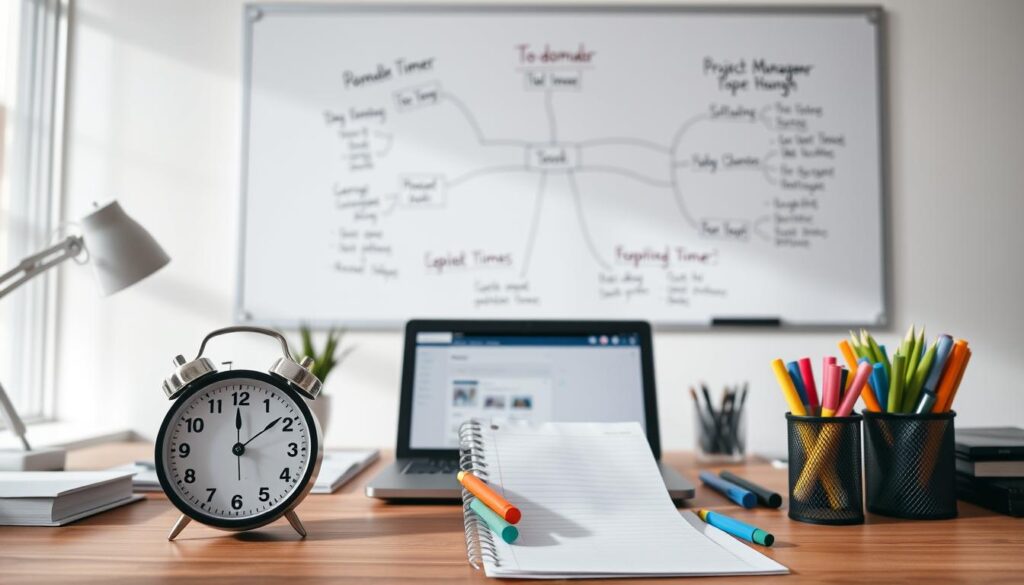
Learning to manage your time well can change how you do daily tasks. It boosts your productivity. Your time is valuable, and using it wisely can improve your life at work and home.
Begin by using strong ways to decide what’s most important. The Eisenhower Matrix is a great tool for managing tasks:
- Urgent and Important: Do these tasks right away
- Important but Not Urgent: Plan these tasks
- Urgent but Not Important: Ask others to help when you can
- Neither Urgent nor Important: Cut out these tasks
Making a smart to-do list is key. Break tasks into smaller parts. Use zero-based calendar blocking to make every minute count. This means setting specific times for each task, so you don’t waste time.
“Productivity is never an accident. It is always a result of a commitment to excellence, intelligent planning, and focused effort.” – Paul J. Meyer
Here are more ways to better manage your time:
- Use tech to track and improve your time use
- Set achievable goals for each day
- Learn to say no to things that aren’t important
- Make routines for mornings and evenings that help you stay productive
By using these tips, you’ll manage your time better. Remember, getting good at time management takes practice and effort.
Essential Time Blocking Methods for Success
Time blocking is a powerful way to manage your workday. It lets you focus on specific tasks at set times. This boosts your productivity and focus. Let’s look at some effective time blocking techniques to help you manage your schedule better.

Effective time management is about working smarter, not harder. The right strategy can help you stay focused and avoid distractions. It’s all about using your time wisely.
Task Batching for Similar Activities
Task batching is a great time blocking method. It groups similar tasks together. This reduces the need to switch between tasks and keeps you focused. Here are some tips:
- Group email responses into a 30-minute block
- Do creative work when you’re most energetic
- Combine admin tasks to cut down on switching
Time Boxing Techniques
Time boxing makes your tasks into focused sprints. By setting strict time limits, you stay on track and avoid getting bogged down. Try these:
- Plan projects for exactly 45 minutes
- Work in 25-minute focused intervals
- Use a timer to keep meetings short
Day Theming Strategies
Day theming takes time blocking further by dedicating days to specific tasks. This reduces decision fatigue and organizes your workflow. For instance, you might:
- Use Mondays for planning
- Have client meetings on Tuesdays
- Do deep creative work on Wednesdays
Using these time blocking methods can change how you work. Start small, try different techniques, and find what works for you.
Managing Distractions and Maintaining Focus
In today’s digital world, managing distractions is key to staying productive. Your work space is filled with notifications, emails, and digital interruptions. These can take your focus away in seconds.
Effective focus techniques can help you take back control of your day. First, identify what distracts you the most:
- Smartphone notifications
- Social media platforms
- Unexpected workplace interruptions
- Cluttered workspace
To fight these distractions, use focus techniques that shield your work. Digital boundaries are your first defense. Use apps to block notifications when you need to focus. Also, set specific times to check messages.
Your physical workspace is also important for managing distractions. Make an environment that reduces interruptions:
- Use noise-canceling headphones
- Create a clean, organized desk
- Communicate your focus hours to colleagues
- Practice mindful breathing between tasks
Managing distractions is about making small, steady improvements. These small changes can greatly improve your focus and task completion.
Building a Sustainable Time Management System
Creating a good time management system is more than just planning your day. It’s about making every part of your day productive. It’s about working smarter, not harder, and building habits that help you reach your goals.
A strong time management system is not just about scheduling. It’s about knowing your energy levels and using them to your advantage.
Morning Routine Optimization
Your morning sets the tone for the day. Here are some tips to boost your productivity:
- Wake up at the same time every day
- Do your hardest task first
- Try a 10-minute meditation or visualization
- Drink water and eat a healthy breakfast
“The secret of your future is hidden in your daily routine.” – Mike Murdock
Midday Productivity Strategies
To keep going strong in the afternoon, plan carefully. Use the Pomodoro method to stay focused and energized.
- Do important tasks when you’re most energetic
- Take short, focused breaks
- Use time blocks for meetings and deep work
Evening Planning and Review
End your day with a purpose. Review what you’ve done, adjust your plans, and get ready for tomorrow.
- Take 15 minutes to review your day
- Plan your top three tasks for tomorrow
- Stay away from work emails and apps
- Relax with a calming activity
Remember, a good time management system is personal. Try different things, adapt, and find what works for you.
Conclusion: Unlocking Your Productivity Potential
Your journey to better productivity is just starting. It’s a continuous path of growth and improvement. Time management is more than just planning your day. It changes how you tackle work and personal life.
Every small change in your daily life can lead to big steps toward your goals. It’s not about being perfect, but about making steady progress. Pick one or two methods that fit your work style and personal pace.
Time management is very personal. What works for one person might not work for another. Try different things, track your progress, and be open to change. Your dedication to improving will unlock your full productivity potential.
Learning to manage your time well takes time and kindness to yourself. Enjoy the learning journey, celebrate small victories, and keep looking for new ways to improve. Your future self will thank you for these efforts in creating lasting, efficient work habits.
FAQ
How long does it take to develop effective time management skills?
Building strong time management skills takes 3-6 months of regular practice. You’ll notice small improvements as you try new methods. Start with one technique at a time and slowly improve your productivity.
What is the most important time management technique for beginners?
For beginners, prioritizing tasks is key. The Eisenhower Matrix helps you sort tasks by urgency and importance. This way, you focus on what’s truly important for your goals.
How can I overcome procrastination and improve my time management?
To beat procrastination, break big tasks into smaller steps. Use the two-minute rule for quick tasks. Create a distraction-free space and set achievable goals.
Use time blocking and share your goals with someone. This helps you stay on track.
Can time management techniques work for different types of jobs?
Yes! Time management strategies work for all jobs. While methods might vary, core principles like prioritizing and minimizing distractions are universal. Tailor techniques to fit your job and personal style.
How do digital tools impact time management?
Digital tools can greatly help or hinder time management. Apps like Trello and RescueTime track tasks and cut down on distractions. But, use them wisely to avoid app-switching, which can be a form of procrastination.
What role does sleep play in effective time management?
Good sleep is crucial for time management. It boosts focus, concentration, and decision-making. Aim for 7-9 hours of sleep and keep a regular sleep schedule. A relaxing bedtime routine helps you stay sharp during the day.
How can I handle unexpected interruptions without derailing my entire schedule?
Add flexibility to your schedule by leaving buffer time and keeping a prioritized list. When interruptions happen, quickly judge their urgency. Decide if you should handle them now or later. Have a plan to adjust your priorities without getting overwhelmed.
Are there specific time management techniques for remote workers?
Remote workers benefit from structured time blocking and clear workspace boundaries. Use the Pomodoro method and set specific work hours. Create a dedicated home office and use apps to track your time. This helps maintain productivity and balance.